
The switching report
Why long-time NAD+ users are drifting toward urolithin A
Both are sold as cellular energy supplements. Their human evidence bases are built very differently, and buyers are starting to notice.
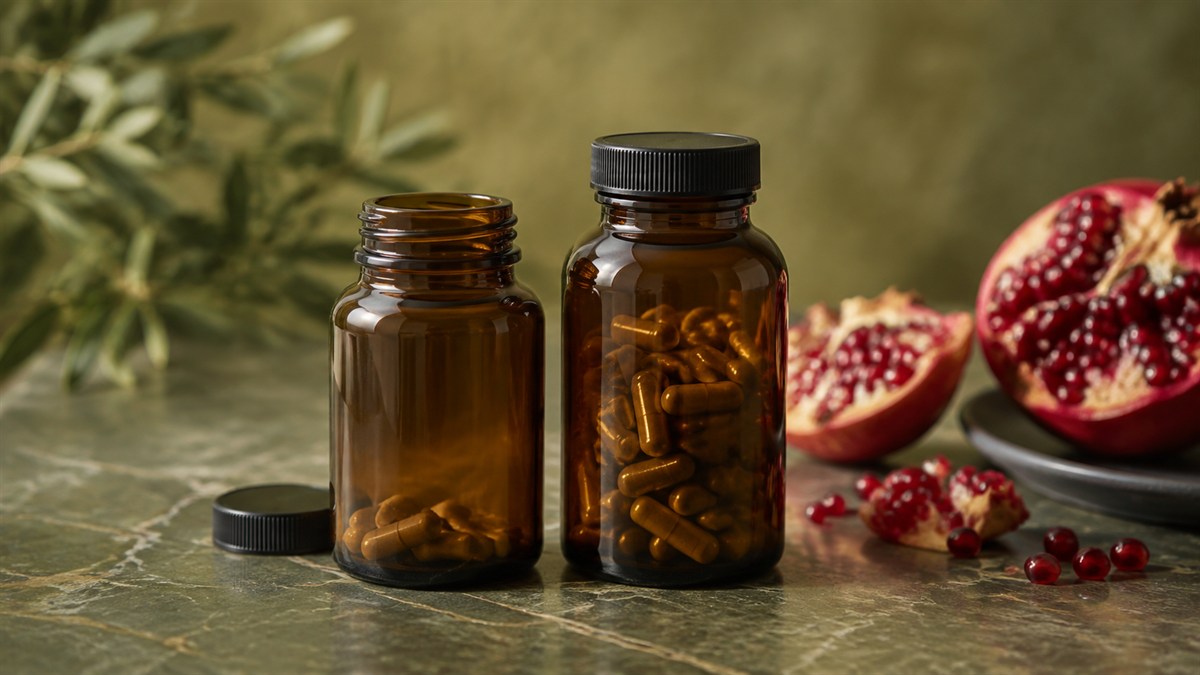
For most of the last decade, if you wanted a longevity supplement with a mechanism story, you bought an NAD+ precursor. That is changing. Urolithin A has moved from specialist to mainstream, and a lot of the people picking it up were taking NMN or NR first.
The short version
- A 2026 narrative review counted roughly 25 randomised NR and NMN trials in about 1,070 people, against roughly 10 randomised urolithin A trials in about 392.
- NAD+ precursors reliably raise NAD+ related blood markers. Translating that into outcomes people notice has been harder.
- Urolithin A has a narrower but more joined-up record: mechanism, biomarker, and early functional results point the same direction, mostly in muscle.
- Neither has demonstrated an effect on human lifespan. No supplement has.
What each one actually does
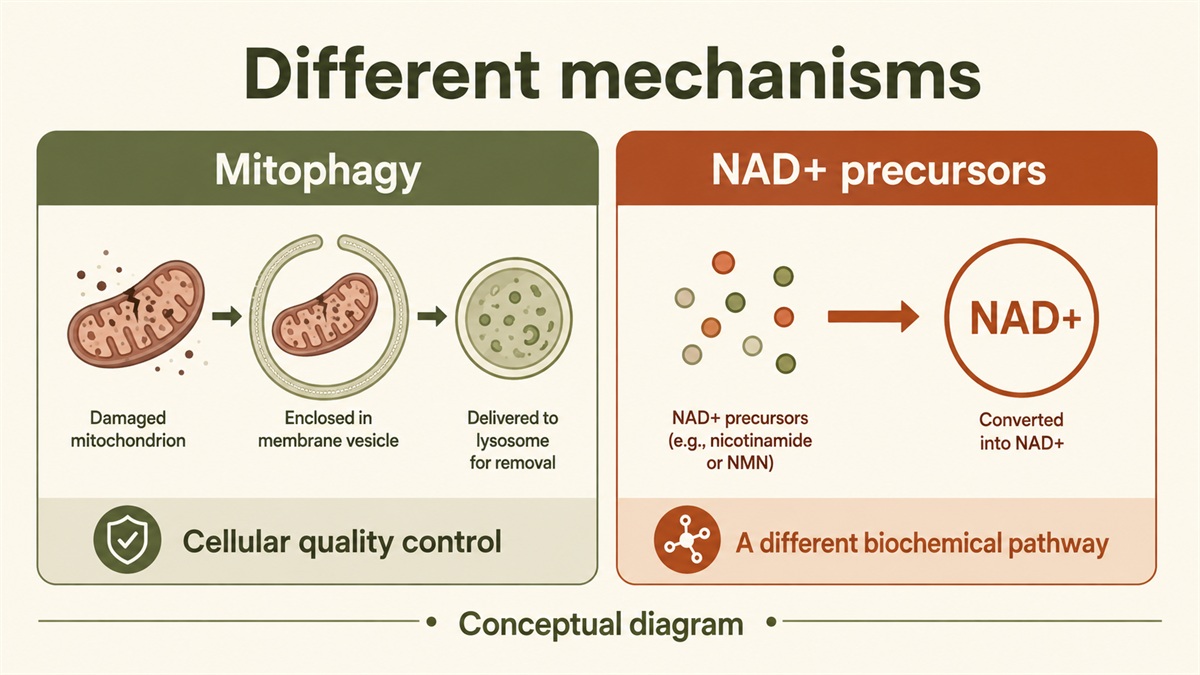
NAD+ precursors are raw material. Nicotinamide riboside and nicotinamide mononucleotide feed a salvage pathway that tops up cellular NAD+, a cofactor involved in energy metabolism and DNA repair. The logic is that NAD+ declines with age, so replacing it should help.
Urolithin A works further downstream and does something more specific. It is produced in the gut from ellagitannins found in pomegranate and some nuts, and it promotes mitophagy: the selective clearing of mitochondria that have stopped working properly. That is housekeeping rather than fuel.
The catch that drove commercial interest is conversion. Only some people carry the gut bacteria that turn dietary ellagitannins into urolithin A, which is why eating pomegranate is not a reliable substitute for the isolated compound.
Where the evidence actually sits
A comparative narrative review published in 2026 went through peer-reviewed human work on urolithin A, spermidine, and NAD+ precursors, and its conclusion was that treating them as interchangeable is a mistake. The volume of trial data favours NAD+ precursors. The coherence of it favours urolithin A.
For NR and NMN, the pharmacodynamic result is not really in dispute. Oral dosing raises NAD+ related biomarkers, repeatedly, across many trials. What remains unsettled is whether that biomarker movement produces changes in strength, cognition, or cardiometabolic risk that a person would notice.
Urolithin A's headline results are in muscle. A 2022 randomised trial in Cell Reports Medicine reported improved muscle strength and exercise performance in middle-aged adults, and a JAMA Network Open trial the same year found greater muscle endurance alongside increased expression of mitochondrial genes. A 2026 systematic review in Nutrition Research Reviews reached broadly similar conclusions on strength and fitness.
That is a real record, but it is a narrow one. Roughly 392 randomised participants is not a large evidence base, most trials ran weeks to months, and the effect sizes are modest.
The two compounds are sold side by side and described in nearly identical language, which is the strongest argument for reading their trial records separately.
Novermix
Why the switch is happening now
Very little of this is being driven by people reading trial data. The practical drivers are simpler. NMN's regulatory position in the United States has been unsettled enough to disrupt supply and unnerve sellers. Urolithin A arrived with an ingredient brand behind it, which meant a consistent identity and a set of trials to point at.
There is also fatigue. People who took an NAD+ precursor for two years and felt nothing specific are receptive to a product with a different mechanism story. That is a reasonable reaction to an absence of personal effect, but it is not evidence about either compound.
What a sensible reader should take from this
If you are choosing between them, the honest summary is that urolithin A has the better evidence for a specific thing, muscle function in middle-aged and older adults, and NAD+ precursors have more evidence overall for a change in biomarkers whose downstream meaning is still being worked out.
Neither is a substitute for the interventions with the largest effect on how long people stay functional: resistance training, sleep regularity, not smoking, and treating blood pressure. Those remain unglamorous and unbeatable.
How the two compare
Roughly 25 randomised NR and NMN trials covering about 1,070 participants, plus six systematic reviews or meta-analyses. Roughly 10 randomised urolithin A trials covering about 392 participants, plus one systematic review.
NAD+ precursors: consistent, large, easily measured biomarker change. Functional outcomes inconsistent. Urolithin A: smaller biomarker changes, but they line up with the mechanism and with the functional measures in the same trials.
Long-term safety data beyond a year is thin for both. Neither has been tested properly alongside the five or six other compounds most buyers take at the same time. Optimal dose in older adults is still being argued about.
Common questions
Does urolithin A replace an NAD+ precursor?
They act on different pathways, so nothing about the biology suggests one substitutes for the other. The people treating it as a replacement are usually doing so for budget or fatigue reasons rather than mechanistic ones.
Can I just eat pomegranate instead?
Only if you happen to carry the gut bacteria that convert ellagitannins into urolithin A, and a substantial share of people do not. That conversion gap is the main commercial argument for the isolated ingredient.
Has either extended lifespan in people?
No. No supplement has been shown to extend human lifespan, and no trial of a realistic length could show it. Trials measure biomarkers and function instead.
Sources
- Urolithin A, Spermidine, and NAD+ Precursors in Human Healthy Aging: A Comparative Narrative Review — https://doi.org/10.4236/jbm.2026.145031
- Urolithin A and spermidine: the mitochondria-first approach to healthy aging — https://medicalnewsbulletin.com/urolithin-a-spermidine-the-mitochondria-first-approach-to-healthy-aging/
- Longevity supplement trends: what's backed by science in 2026 — https://thelongevitystore.com/blogs/blog/longevity-supplement-trends-whats-backed-by-science-in-2026