
The switching report
The GLP-1 era rewrote the supplement shelf
Prescription weight-loss drugs changed what people want from a supplement. The industry responded with a wave of products making adjacent claims.
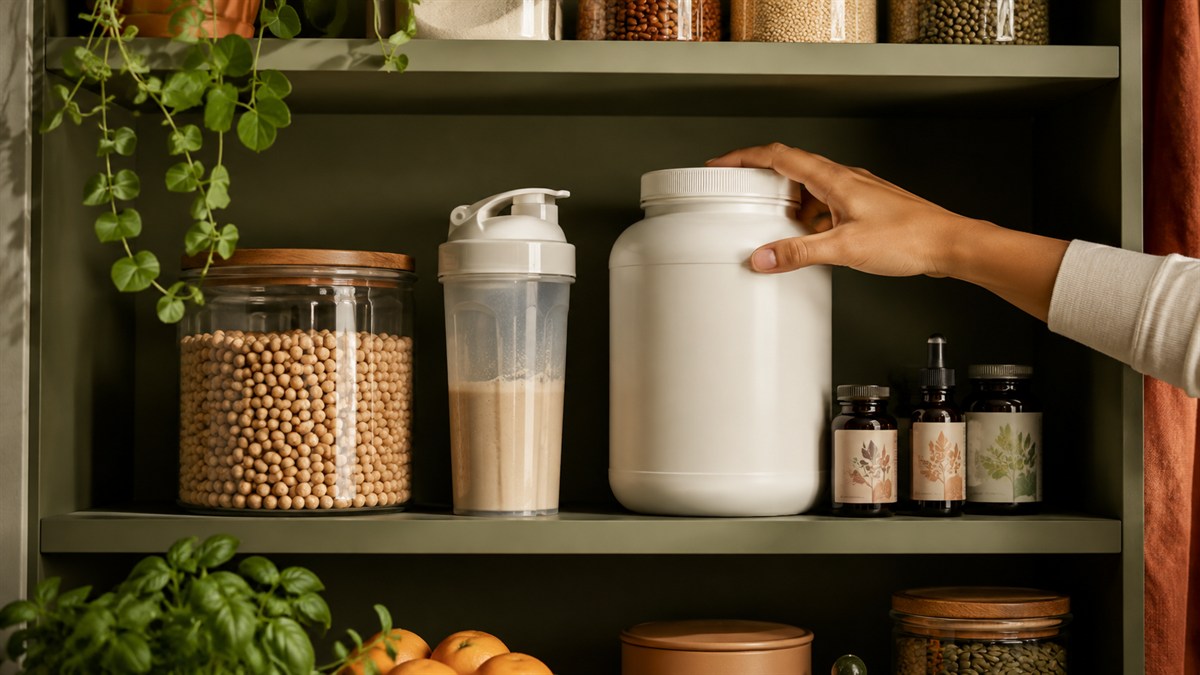
Walk any natural products trade show floor since 2025 and the pattern is hard to miss. Products claiming to support, stimulate, or mimic GLP-1 are everywhere. The prescription drugs reshaped consumer expectations, and the supplement industry moved to meet them.
The short version
- GLP-1 adjacent claims were among the most visible trends at major 2025 industry shows, and the products kept arriving through 2026.
- Two genuinely useful categories grew alongside the drugs: protein, for preserving lean mass during rapid weight loss, and fibre, for satiety and gut tolerance.
- Botanicals marketed as natural GLP-1 activators are a different proposition. The effect sizes are not remotely comparable to the drugs.
- The most consequential shift is not a compound. It is that consumers now expect supplements to do something measurable.
What actually changed
Before GLP-1 receptor agonists became widely prescribed, the weight management supplement category ran on vague promises and low expectations. People bought things, did not notice much, and bought something else. The drugs broke that cycle by producing an effect nobody could miss.
That has been unhelpful for products with modest mechanisms and useful for products with real ones. A consumer who has experienced pharmacological appetite suppression has a new benchmark, and a botanical that shifts satiety slightly no longer clears it.
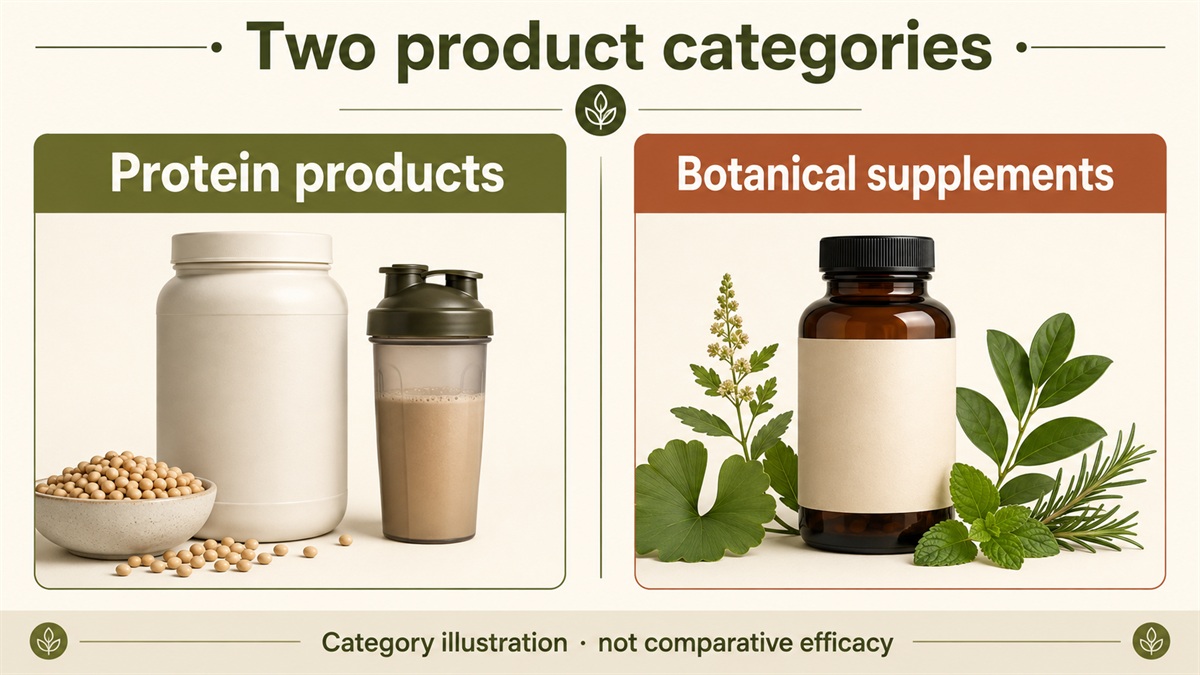
The categories that grew for good reasons
Protein is the clearest example. Rapid weight loss on a GLP-1 drug takes lean mass along with fat, particularly in older adults, and clinicians started advising higher protein intake and resistance training to limit that. That is a sound recommendation with a straightforward product answer.
The plant-based protein market has been growing at a compound annual rate of roughly seven and a half percent, from about 14.3 billion dollars in 2024 toward a projected 20.5 billion by 2029. Not all of that is GLP-1 related, but the timing is not a coincidence.
Fibre and electrolyte products found a similar niche, addressing the constipation, nausea, and hydration problems that come with the drugs. These are unglamorous products solving real reported problems.
The claims that need scrutiny
Then there is the other wave: botanicals and peptide-adjacent products marketed as stimulating your body's own GLP-1. Some of the underlying ingredients do have measurable effects on satiety hormones in controlled settings. The question is magnitude.
A prescription GLP-1 agonist produces sustained receptor activation at pharmacological concentrations. A botanical that nudges endogenous secretion produces something orders of magnitude smaller and shorter-lived. Both can be described using the phrase 'supports GLP-1', which is why the phrase is doing so much work in current marketing.
Regulators have started paying attention to the gap between the implied comparison and the permitted structure-function claim. Expect enforcement activity in this category.
What this means for buyers
If you are on a GLP-1 drug, the supplement conversation worth having with your clinician is about protein intake, resistance training, and micronutrient adequacy during reduced food intake. That is where the evidence and the risk both sit.
If you are not, and you are looking at a natural alternative, read the claim carefully. Supporting a pathway and activating a receptor are not the same sentence, and the difference is the entire product.
Sorting the category
Protein intake to preserve lean mass during weight loss. Resistance training alongside it. Adequate micronutrients when total food intake drops sharply.
Viscous fibres for satiety and glycaemic response. Effects are real, well-characterised, and much smaller than pharmacological appetite suppression.
Products whose marketing implies equivalence to prescription GLP-1 agonists. The comparison is not defensible on effect size, and the claim structure is increasingly a regulatory risk.
Common questions
Do any supplements work like the drugs?
No. Nothing sold as a dietary supplement produces effects comparable to a GLP-1 receptor agonist. Products implying otherwise are relying on the reader to conflate supporting a pathway with activating a receptor.
Is extra protein actually necessary on these drugs?
Preserving lean mass during rapid weight loss is a real clinical concern and protein plus resistance training is the standard advice. The right amount for you is a question for your clinician, not a label.
Sources
- 2026 supplement trends: high-growth categories — https://vitaquest.com/supplement-trends-2026/
- Longevity supplements in 2026: what science really says — https://betterandhealthy.com/longevity-supplements-2026/