
Metabolic signals
What two weeks with a CGM actually teaches a person without diabetes
Over-the-counter glucose sensors are now a pharmacy purchase. Used as a short experiment they are genuinely informative. Worn permanently they mostly generate anxiety.
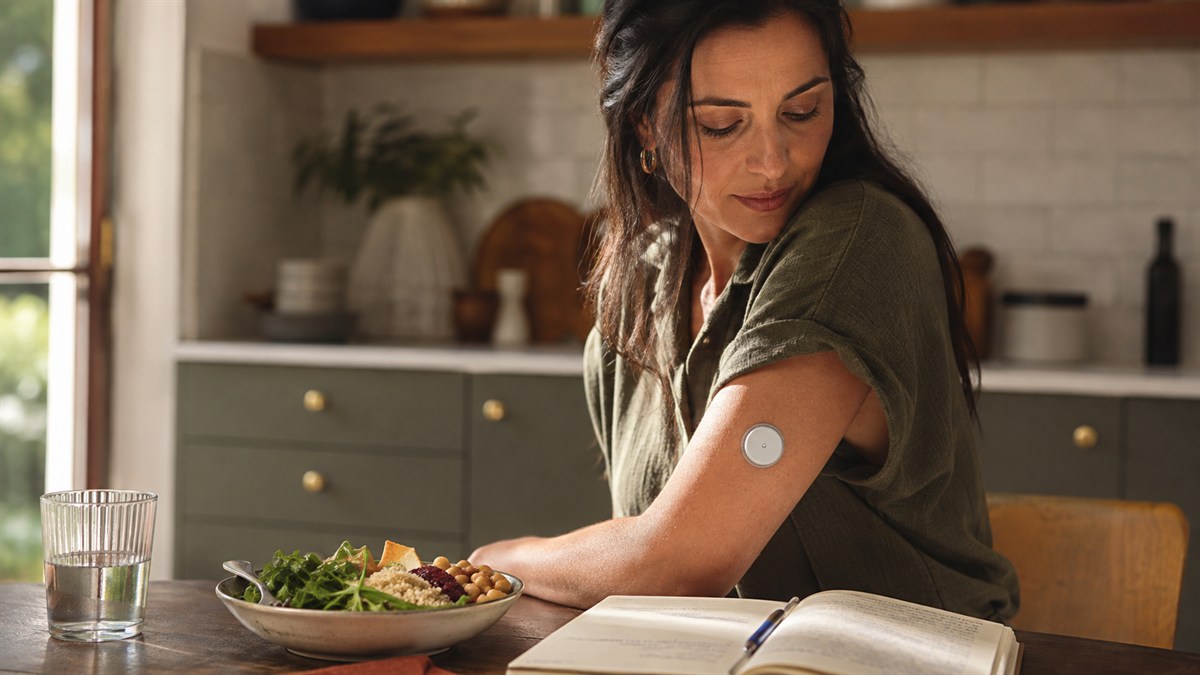
Continuous glucose monitors moved from prescription-only diabetes equipment to something you can buy over the counter. That is a genuine advance in access, and it has created a new problem: a lot of people now have detailed data they have never been taught to read.
The short version
- The Dexcom Stelo was the first over-the-counter CGM cleared in the United States, built on the same platform used by people with diabetes.
- Sensors typically last around 15 days and report roughly every five minutes, at prices near three dollars a day.
- Most experienced users run two to four week experiments rather than wearing one continuously, which matches where the informational value is.
- Glucose rising after a meal is normal. Comparing meals against each other is useful. Comparing a single number against a threshold you read online is not.
What you can actually buy now
The category opened up when over-the-counter sensors arrived. The Dexcom Stelo was the first cleared for sale without a prescription in the United States, built on the same underlying platform as the company's prescription products. Abbott's consumer line arrived alongside it, and Abbott has said more than six million people across sixty-plus countries use its continuous glucose technology, which gives some sense of how far this has moved beyond early adopters.
Practically, a sensor sits on the upper arm, lasts around fifteen days, and streams to your phone every few minutes. Two sensors run in the region of a hundred dollars, so roughly three dollars a day. Subscription platforms that layer coaching and analysis on top cost considerably more.
The three things a short experiment actually reveals
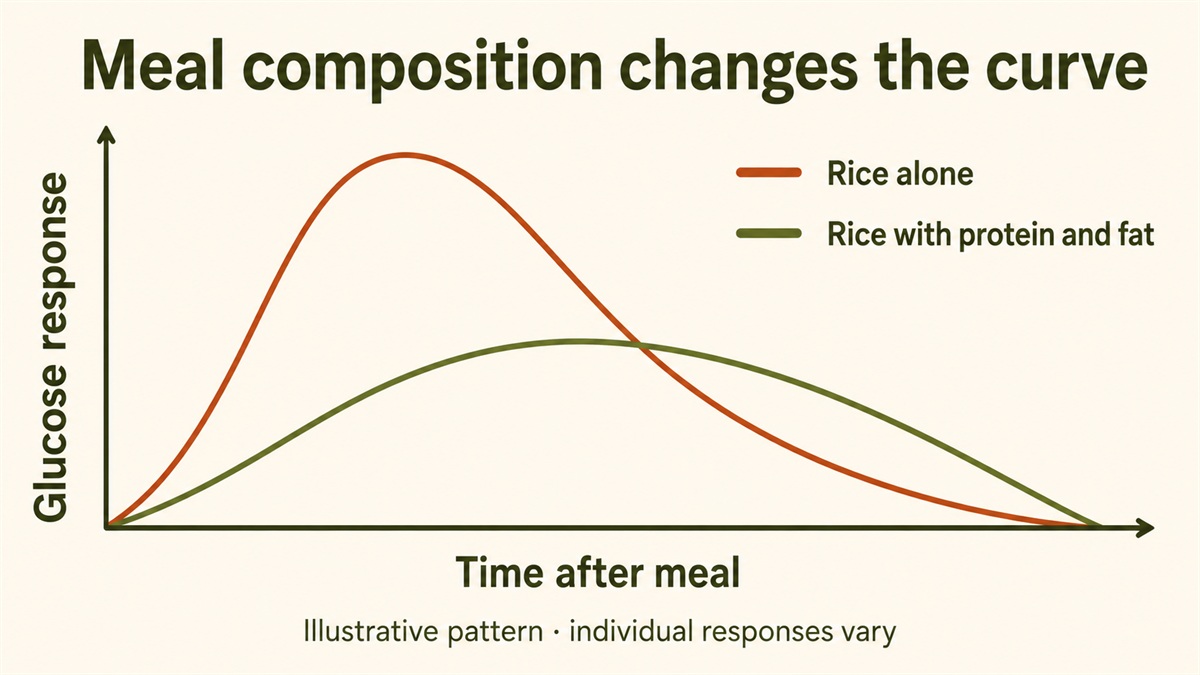
First, meal composition. The demonstration that changes behaviour faster than any dietary guideline is eating the same carbohydrate alone and then with protein and fat, and watching the curve flatten. That is a real, reproducible physiological effect and seeing it in your own data is more persuasive than being told about it.
Second, surprises. Nearly everyone finds at least one food they assumed was benign that produces a large response, and one they expected to be a problem that is not. Breakfast smoothies are the classic example.
Third, the effect of things that are not food. A short walk after eating blunting a rise, a badly slept night raising the whole day's baseline, a stressful meeting producing a spike with no meal attached. That last category is often the most useful and the least anticipated.
A post-meal rise to 160 is a normal physiological response, not a diagnosis. Most of the distress I see comes from reading a curve as a verdict.
Novermix
Where it goes wrong
The most common failure is treating a number as a verdict. A rise to 160 milligrams per decilitre after a meal is a normal physiological response in a person without diabetes. It is not pre-diabetes, it is not damage, and it does not require a dietary overhaul.
The second failure is permanence. The informational value of a CGM is concentrated in the first few weeks, while you are learning your own patterns. After that, returns diminish sharply for someone with normal glucose regulation, and the risk of an unhelpful relationship with eating rises.
The third is the interpretation layer. Every consumer platform converts raw sensor data into scores and recommendations, and those algorithms are proprietary, unvalidated, and inconsistent between products. The sensor data is the trustworthy part. The score on top of it is a product decision.
A reasonable way to run one
Wear it for a week and change nothing at all. Eat normally, live normally, ignore every alert. You are establishing a baseline, and the first days are usually the noisiest.
In the second week, run deliberate comparisons. Same meal, two ways. Same meal, with and without a ten-minute walk afterwards. Then take the sensor off and keep the two or three things you learned. If a reading genuinely worries you, that is a conversation for a clinician and a proper blood test, not for a wellness app.
What the numbers mean
A rise after eating is what is supposed to happen. What is informative is how high relative to your own other meals, and how quickly it returns to baseline.
Usually the flattest part of the trace. A baseline that is unusually high across several nights is one of the few CGM findings genuinely worth raising with a clinician.
Compression from lying on the sensor produces false lows. The first day after insertion is often unreliable. Do not build a theory on a single strange reading.
Common questions
Do I need a prescription?
Not in the United States for the over-the-counter models. Availability and rules differ elsewhere, so check locally.
Is it worth it if my bloods are normal?
As a two to four week learning exercise, many people find it worthwhile. As a permanent accessory with normal glucose regulation, the case is much weaker.
Can it tell me I have pre-diabetes?
No. Diagnosis uses specific validated blood tests. A consumer CGM can flag something worth investigating, and that investigation happens in a clinic.
Sources
- Best CGMs for non-diabetics, athletes and biohackers — https://outliyr.com/best-cgms-healthy-biohackers
- Wearable health tech trends 2026 — https://haznos.org/2026/wearable-health-tech-trends-2026/
- Best biohacking products in 2026 — https://www.mindlabpro.com/blogs/nootropics/biohacking-products