
Metabolic signals
Protein moved from the gym aisle to the longevity aisle
The least novel supplement in the shop turned into a healthspan product, and for once the repositioning is broadly justified.
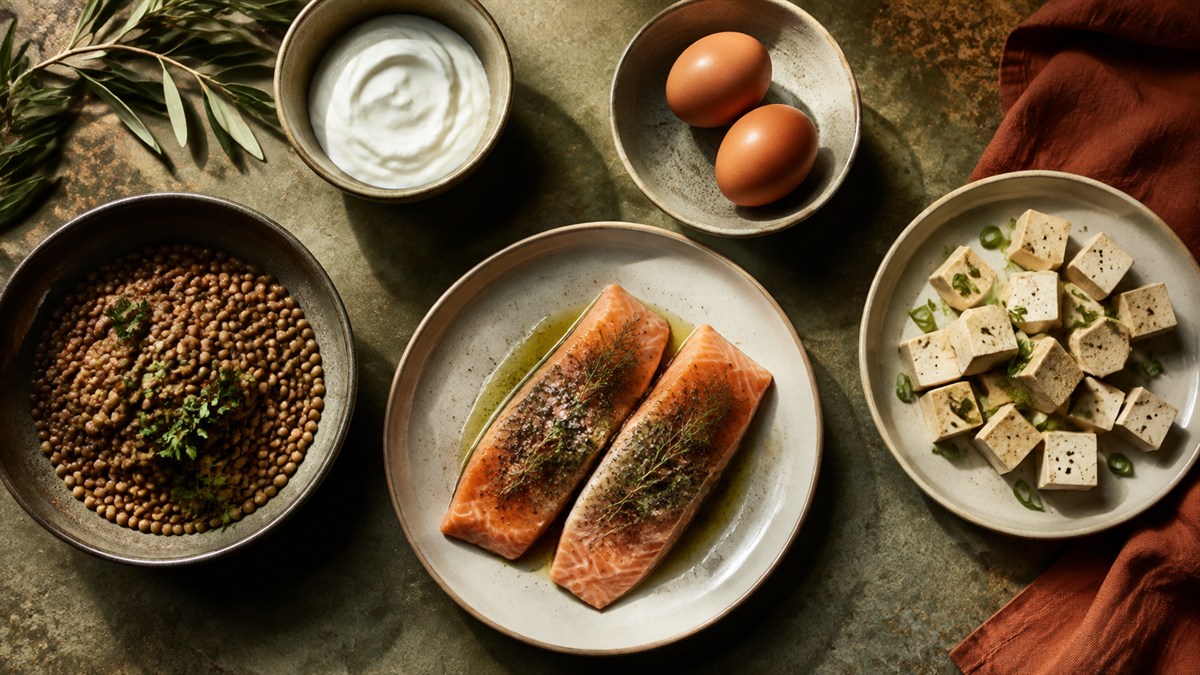
Protein powder spent thirty years marketed to people who lift. It is now marketed to people who want to still be able to stand up from a chair at eighty. That is a marketing shift, but unusually, it is one the evidence mostly supports.
The short version
- Loss of muscle mass and strength with age is one of the better-established predictors of losing independence.
- Protein adequacy plus resistance training is the intervention with the most consistent support, and neither works well alone.
- The plant-based protein market is growing at roughly seven and a half percent a year, projected from about 14.3 billion dollars in 2024 to 20.5 billion by 2029.
- Powder is a convenience format, not a superior one. Food works.
Why this is not just repositioning
Muscle is not only about strength. It is the largest site of glucose disposal in the body, it is a reserve during illness, and its decline tracks closely with the loss of independence in older adults. Interventions that preserve it have downstream effects that reach well beyond how much someone can lift.
Older adults also become less efficient at converting dietary protein into muscle protein, which means requirements go up rather than down with age. That is the honest basis for the longevity framing.
The part the marketing skips
Protein without a resistance stimulus does relatively little. The trials that show meaningful preservation of lean mass in older adults pair intake with training. Selling the powder without the training is selling half an intervention.
There is also a ceiling. Beyond a point, additional protein is oxidised rather than incorporated, and the marginal benefit flattens. Consuming enormous quantities is expensive rather than dangerous for most people, but it is not more effective.
Plant versus animal, briefly
The plant-based side has grown quickly, driven by dietary preference, sustainability, and tolerance. The practical difference is amino acid profile: many single plant proteins are lower in leucine, which is the primary trigger for muscle protein synthesis. Blends and slightly larger servings close most of that gap.
For most people, the protein they will actually consume consistently beats the theoretically optimal one they will not. That is an unfashionable answer and it is usually the right one.
Common questions
How much do I need?
It depends on body weight, training, age, and kidney function, so a specific number in an article would be misleading. This is a genuinely good question for a dietitian.
Is powder better than food?
No. It is more convenient and easier to measure. Whole food sources bring micronutrients that isolates do not.
Sources
- 2026 supplement trends: high-growth categories — https://vitaquest.com/supplement-trends-2026/